Table Of Content

Boeing 787 Dreamliner is one example out of many that uses swept back wings. A good example of an aircraft where a rectangular wing was used is the Piper PA 38. One major disadvantage of a rectangular wing is that it isn’t aerodynamically efficient. Some types of variable geometry craft transition between fixed wing and rotary wing configurations.
How and why aircraft wings will become longer and thinner - Aerospace Testing International
How and why aircraft wings will become longer and thinner.
Posted: Wed, 09 Aug 2023 07:00:00 GMT [source]
Astronauta de la NASA Marcos Berríos
If you look out of the window and at the wing of a modern airliner like the Boeing 787 during takeoff and landing you are sure to see a high degree of flexing. The lift produced by the wing results in a large bending moment at the wing root that must be transferred to the wingbox (the structure that connects the wing to the fuselage). An elliptical wing design has a leading and trailing edge that curves into the segment of an ellipse.
Forward-Swept Wings
Landing gear legs and engine mounts are supported by especially sturdy ribs, as the loads introduced by these components can be very large. The spar caps are designed to the carry axial loads (tension and compression) that arise from the bending moment produced by the wing under load. In a positive g manoeuvre, the spar caps on the upper surface of the wing are in compression and the lower spar caps surface in tension. Designing the planform or shape of a wing is a complicated process undertaken to optimize the aircraft for a particular mission. In our Fundamentals of Aircraft Design series there are three posts dedicated to preliminary wing design.
Introduction to Aerospace Flight Vehicles
Obsessed with the aerodynamics of flight since his childhood, Whitcomb was famous for his single-track focus. He never married, and he often worked two shifts per day, sleeping on a cot at the high-speed wind tunnel facility. His nephew, David Whitcomb, told the New York Times that NASA accountants scolded his uncle more than once for letting his paychecks expire while he used them as bookmarks. For decades, Whitcomb had been working on getting aircraft to move faster and more efficiently.
Wing Loads and Structural Layout
“My grammar school and high school education, outside of the school of hard knocks, was the only education I ever had,” Northrop said. I didn’t have any correspondence courses, or anything of this sort.” Despite his lack of formal education, he went on to be recognized as one of the leading aircraft designers of the century. More advanced flying wing aircraft were produced by others, notably Walter and Reimar Horten in Germany, but the concept was taken to its fullest by the innovation of John Knudsen Northrop. The wing design is not very common and is mainly seen in prototype aircraft. However, some research is being conducted for the wings’ potential in small UAVs. Anhedral wings are wings whose configuration is the mirror image of dihedral wings.
It remained a matter of personal pride and endless argument among the men who had worked on the Mustang whether the laminar flow wing or the so-called “Meredith effect” cooling system was more responsible for its speediness. Real airplanes would have fuselages and engine nacelles and control-surface gaps and underwing radiators and air intakes and guns, all of which made the lift distribution depart from the ideal of a smooth ellipse. The wing skins is a semi-monocoque structure are load bearing and carry and transmit shear loads into the neighbouring spar caps and stiffeners. Other derived geometric parameters relevant to wings are the standard mean chord (SMC) and the aerodynamic mean chord or mean aerodynamic chord (MAC). Mean chords are used in aerodynamic analyses as a reference length, such as to calculate pitching moment coefficients.
If you are looking for a particular model you can find it easily with this program. If you are looking for upgrades for your aircraft, they have them as well and offer support for those who are hobbyists and have a lot of experience creating their own model planes and helicopters. Founder and engineering luminary Mark Page pioneered our ultra-efficient airframe with team members Bob Liebeck and Blaine Rawdon at McDonnell-Douglas. He later co-founded DZYNE Technologies where he continued to advance the BWB design in collaboration with NASA. The suspended wings rest over self-supporting glass walls that front the hillside house, which was designed by American architects Studio of Environmental Architecture.
The progenitor of the building’s form was envisioned as a floating curved roof. It soon became apparent, that in fact, an airplane wing itself could work. In researching airplane wings and superimposing different airplane wing types on the site to scale, the wing of a 747, at over 2,500 sq. Ft., became an ideal configuration to maximize the views and provide a self supporting roof with minimal additional structural support needed. His first true flying wing was the N-1M—for “Northrop First Mockup”—in 1940, by which time he was the head of his own aircraft company. The N-1M was a small test bed with a wingspan of just 38 feet, constructed mostly of wood to allow easy changes to the configuration.
What are some of the most common plane wing configurations?
It hit a rough spot, bounced 10 feet into the air, and flew several hundred feet before the pilot landed it. In the 1940s, Jack Northrop generated great excitement with his amazing “Flying Wing,” which flew like an airplane but didn’t look like one, at least not in the traditional sense. It demonstrated that an aircraft did not need a tail or a fuselage to fly.
The new approach to wing construction could afford greater flexibility in the design and manufacturing of future aircraft. Once dubbed “the man who could see air,” NASA engineer Richard T. Whitcomb used a combination of visualization and intuition to revolutionize modern aviation — by turning the shape of the airplane wing on its head. In a semi-monocoque structure both the outer skin and the internal substructure are load bearing, and both contribute to the overall stiffness of the structure. A semi-monocoque structure is well suited to being built from aluminium as the material is both light and strong. The density of an aluminium alloy is approximately one-third that of steel which allows for thicker structural sections to be built from aluminium than would be possible with a steel structure of equivalent mass.
NASA's Newest X-Plane Plans to Revolutionize Aircraft Wing Design - autoevolution
NASA's Newest X-Plane Plans to Revolutionize Aircraft Wing Design.
Posted: Fri, 16 Jun 2023 07:00:00 GMT [source]
These are longitudinal components that perform a similar function to the spar caps in that they carry axial loads that arise from the bending of the wing. The stiffeners are spaced laterally through the wing to support the wing skins against buckling. Both control surfaces work by modifying the local camber and lift distribution over the area in which they operate.
American consumers and industry throw away enough aluminum in a year to rebuild our entire airplane commercial fleet every three months. It achieved some gain in top speed, but the extra weight of the jet engines reduced the range and the bomb load significantly. It also had “mission-limiting stability problems that rendered it unsuitable for a bombing platform,” Hallion said.
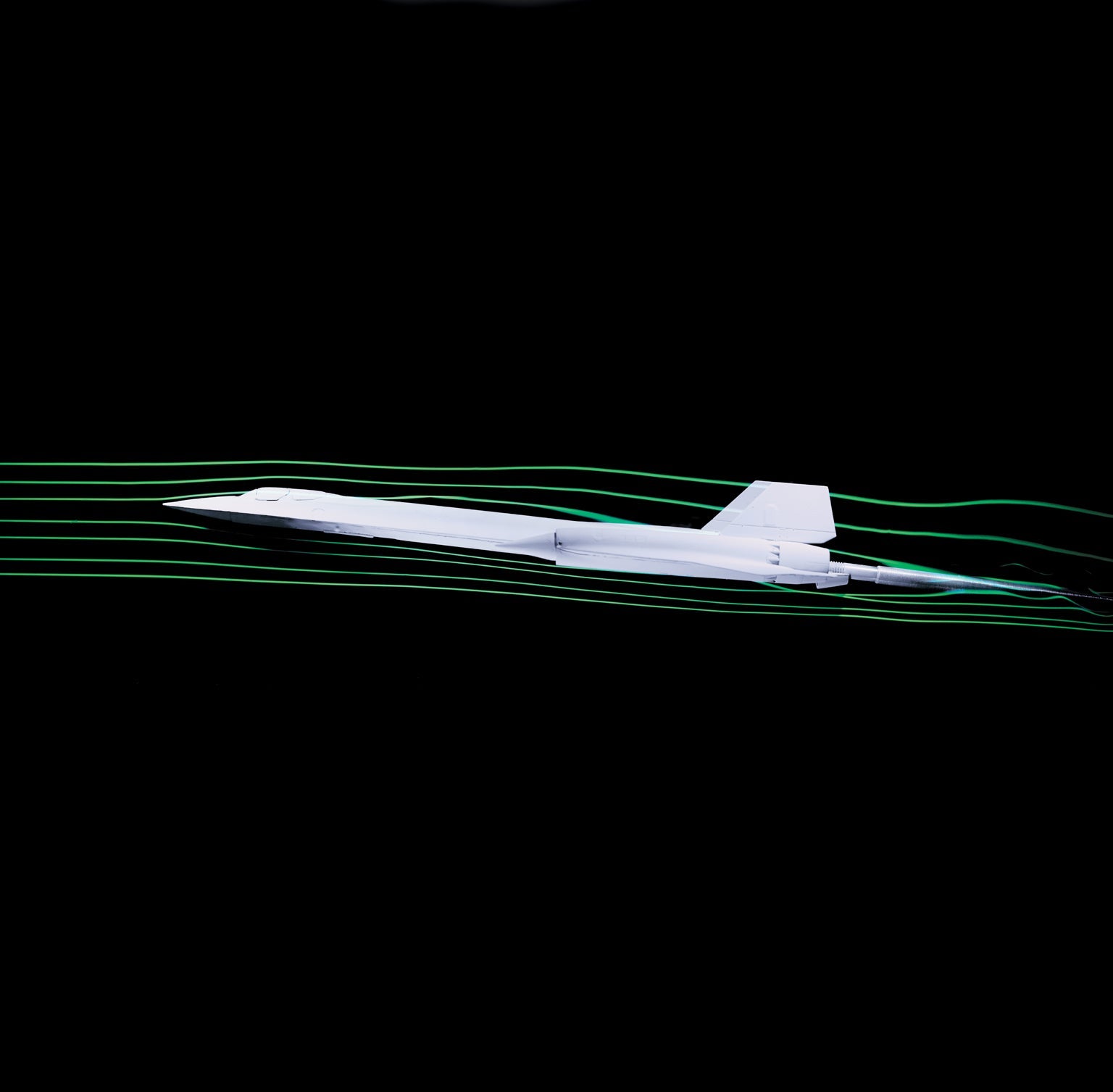
Thus, for aerodynamic analysis, the free-stream Mach number, that is, the flight Mach number of the aircraft, is resolved into components normal and parallel to the wing’s leading edge based on the local sweep angle. However, a problem with a forward-swept wing is that it is aeroelastically unstable and tends to twist nose-up under the action of aerodynamic loads, so forward sweep is rarely used. As described above, a shear flow analysis is used to size all the shear components of the wing structure (webs and skins). We now examine the bending components of the design; namely the spar cap areas and the propensity of the skins on the upper surface of the wing to buckle under compression at high load factors. The aspect ratio of a wing on an airplane can be increased by increasing the wing span and decreasing the wing chord, as shown in the figure below; this example also holds the wing area constant. The aerodynamic advantage in doing so is a significant reduction in induced drag because the wing tip vortices (the source of this type of drag) are further away from more of the wing.
All of the flight controls, “elevons” that functioned as both elevators and ailerons, and flaps that acted as rudders, were mounted on the trailing edges of the wings. Gull wing aircraft have a sharp dihedral at the root and little or none in the main section. This wing design was sometimes used to improve forward visibility or as the upper wing on biplanes.
Like dihedral wings, some older biplanes also had a mixture of anhedral and straight wing configurations. Modern famous examples of aircraft with this kind of wing include the mightly Antonov AN-225. To a discerning eye, the differences between the wings on both the Spitfire and He 70 were as striking as the similarities. The He 70’s wing, viewed head-on, has an inverted gull shape, and in top view it grows narrower near the fuselage. Both features were intended to reduce aerodynamic interference between the fuselage and the wing.

This is the third post in a series of fundamental aircraft design articles which aim to give you an introduction to aircraft design principles. In the previous post we examined the lift, drag, and pitching moment coefficient acting on an aerodynamic body caused by the resulting pressure and shear distribution. In this post we discuss the importance of wing design, specifically wing area and aspect ratio, and show why it is a great place to start when designing a new airplane. An aircraft’s wing is the primary contributor to it's ability to generate a lifting force greater than its weight, and therefore take flight. Every wing is carefully sized to best fulfill the mission specifically intended for that particular airplane.


No comments:
Post a Comment